


Digital Equipment Management in Construction: How Kröger Construction Brings More Transparency to Machine Planning with SAM
Kröger Construction is a construction company where machines, vehicles, and equipment are used daily on various construction sites. In addition to the actual construction business, the organization of the equipment fleet plays an important role: Where is which machine located? Which project needs it? How long will it be in use there – and do planning and actual usage ultimately align?
Among others, Mirco Rönpage, Commercial Director at Kröger Construction, deals with these questions. His responsibilities include purchasing, process optimization, and the further development of digital processes within the company.
At Kröger Construction, the principle is not to digitalize every process at any cost. Instead, they regularly examine which processes can be meaningfully improved – and where digital solutions actually create added value in daily work.
This approach is precisely what led to the search for a solution for equipment management.
Today, Kröger Construction uses the Smart Asset Manager (SAM) from syniotec to centrally manage machines and equipment, plan them for construction sites, and evaluate them via telematics.
When Equipment Information Resides Primarily in People's Heads
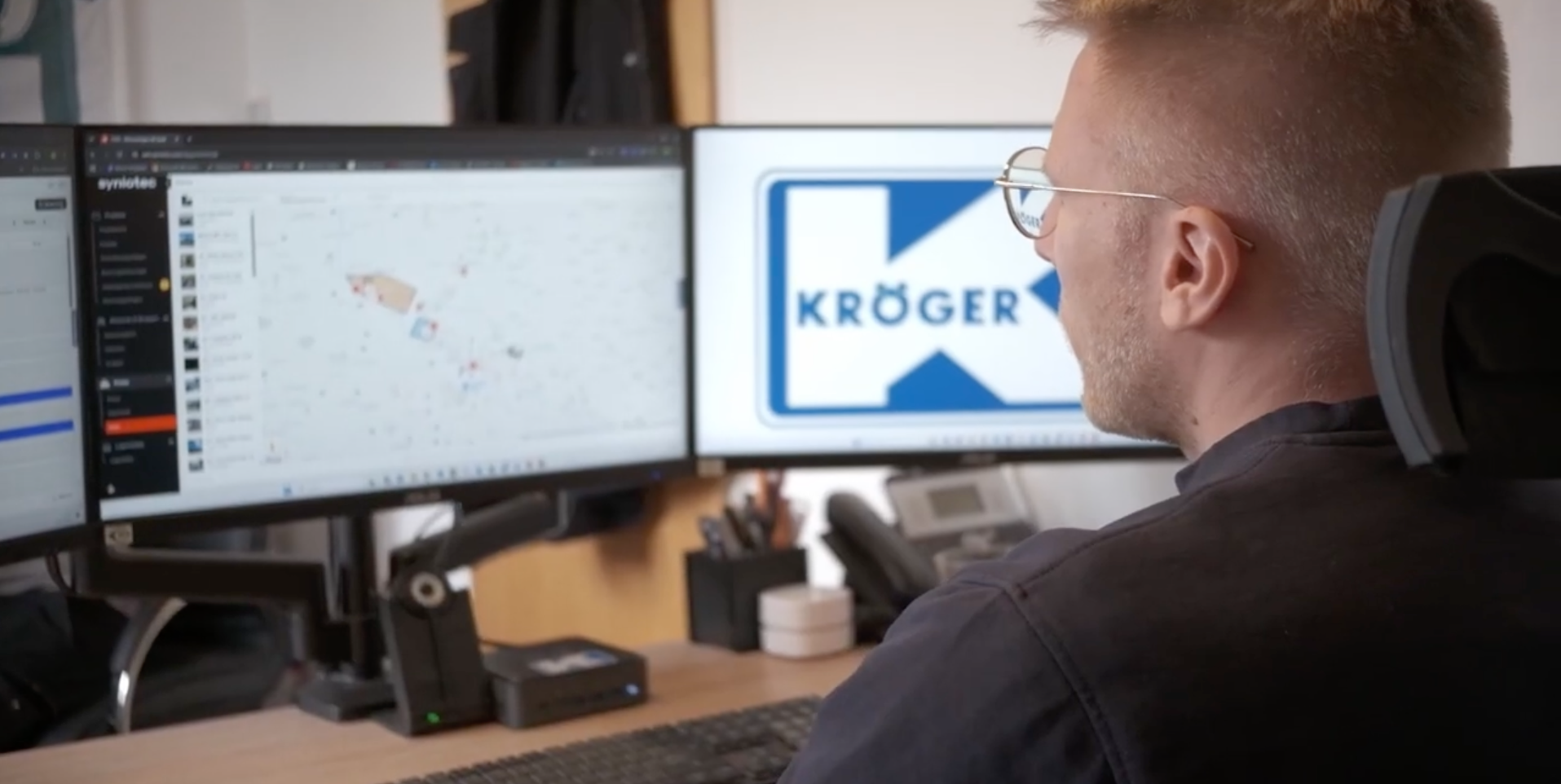
Before SAM, Kröger Construction already had a simple GPS management system. It showed where individual machines were located. However, there was no continuous equipment planning or central digital equipment management yet.
If a machine was needed on another construction site, the process often began with a phone call.
Is the equipment still needed on site? Can it be picked up? Where should it be used next?
Especially for smaller machines, which are sometimes taken along by a crew on a trailer, this knowledge often resided directly with the foremen and site managers.
“The location of the equipment was sometimes simply in the heads of the foremen and site managers,” says Mirco Rönpage.
Operating hours or mileage also sometimes had to be obtained manually. The workshop documented values, for example, during inspections. If data was needed in between, a call was made to the construction site, and then work continued with Excel.
For Kröger Construction, it quickly became clear: they were not looking for another pure tracking solution, but rather software that connects equipment management, planning, telematics, and evaluation.
The Search for a Solution Took Several Years
Kröger Construction had been looking into various software and telematics providers for some time. Several solutions were reviewed, but one requirement proved to be particularly important.
Due to various framework agreements, construction site areas or geofences at Kröger Construction can overlap. Nevertheless, machines should still be able to be clearly planned, assigned to projects, and subsequently evaluated.
This is precisely where the company encountered limitations with some solutions.
With SAM from syniotec, Kröger Construction finally found a platform that could meet these requirements and also goes significantly beyond mere location display. Mirco Rönpage says:
“With syniotec, we not only have a tracking system, but a complete equipment management system that allows us to deploy, plan, and evaluate equipment.”
Today, Equipment Organization Begins in the SAM Planner
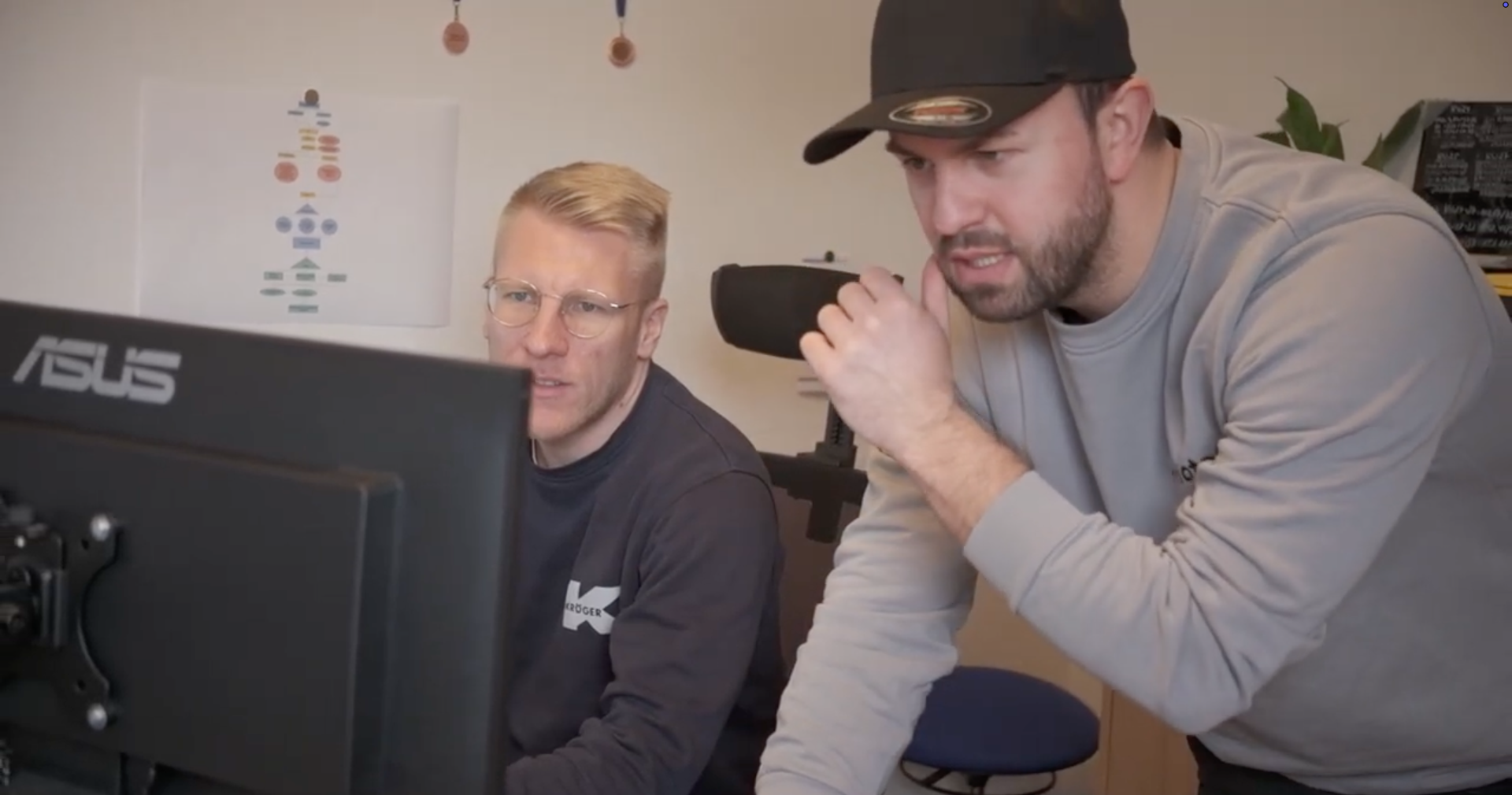
An important component in daily work today is the integrated planner. Machines and equipment can be planned in advance for projects and construction sites. This not only shows where a piece of equipment is currently located, but also where it is intended to be used.
For Mirco Rönpage, this primarily means more overview. He can check whether equipment is planned correctly, whether the assignment to the respective construction sites is appropriate, and whether deployment and utilization periods match.
At the same time, communication within the company has also changed.
“We no longer have to call around to find out where the equipment is or where it’s planned to be.”
Instead of gathering information from various sources, there is a more structured process around equipment planning. Site management, workshop, and administration now work on a common data basis.
Equipment Data Becomes Information for Controlling
For Kröger Construction, however, the location of a machine is only one part of the information relevant in daily operations.
At least as important is the question: How was the equipment actually used?
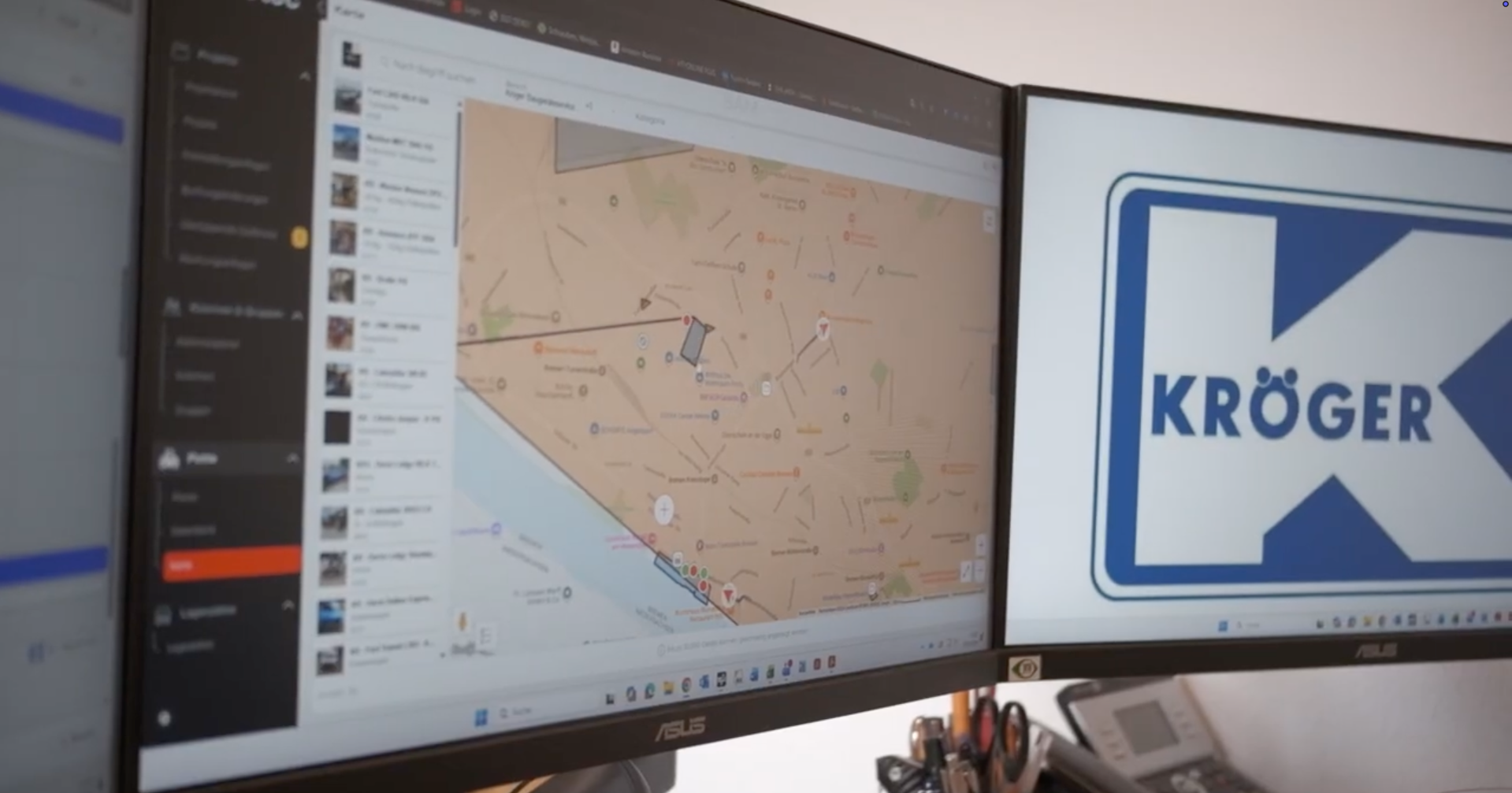
Via SAM, deployment and utilization periods can be retrospectively traced and then further evaluated in controlling. This allows Kröger Construction, for example, to check whether the original calculation of a project matches the actual machine usage.
“Today, we can see if our calculation approaches align with how we actually use the equipment.”
Operating hours and mileage are also centrally available. What used to be partially queried by phone on the construction site and then transferred to Excel can now be viewed directly from the equipment data.
Thus, telematics becomes not only a tool for GPS tracking, but also the basis for planning, evaluation, and controlling.
Digitalization Doesn't End with Equipment Planning
With the introduction of SAM, the digitalization process at Kröger Construction is not complete.
On the contrary: new ideas constantly emerge during ongoing operations about which additional processes could be digitally mapped. One example is their own workshop.
Until now, inspection documents were sometimes still managed traditionally using documents and folders. With the SAM Workshop Module, Kröger Construction also wants to digitalize these processes more strongly in the future.
“With the workshop module, we also want to digitalize these processes and no longer file individual inspection slips in folders.”
Equipment management, telematics, planning, and workshop processes are thus intended to increasingly work together in the long term.
Another important point for Kröger Construction is the collaboration with syniotec. During the implementation and also in ongoing operations, the company regularly exchanges ideas with the syniotec team.
Questions, problems, and new requirements are discussed together.
“When problems arose, a solution was always sought as quickly as possible – and usually found.”
Precisely because requirements in construction companies differ from operation to operation, this collaboration is relevant for Kröger Construction.
Not every process needs to be simply digitally replicated.
For Mirco Rönpage, it’s more about questioning existing processes.
“You shouldn’t try to simply map the current process one-to-one digitally, but rather look at where real added value is created.”
This idea runs through the entire digitalization effort at Kröger Construction.
The focus is not on the software, but on how daily work can be made simpler, more transparent, and more traceable.
For the company, SAM is therefore not just a tracking system, but a platform on which further processes around machines, vehicles, and equipment can be gradually brought together.